"An Intimate Economy: Henze, Bachmann, Davy, and the Price of Recognition,” The Journal of Musicology, Vol. 42, Issue 2, pp. 153–184. [pdf]
Abstract:
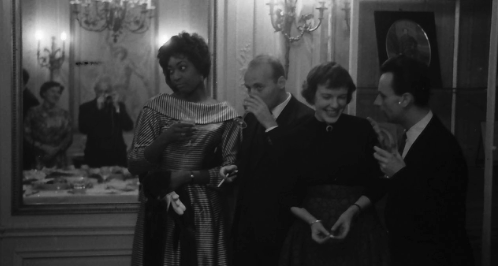
The 1957 Donaueschingen Festival provided high-profile visibility for Nachstücke und Arien, a new work featuring Gloria Davy singing Hans Werner Henze’s setting of Ingeborg Bachmann’s poetry. Only moments into the first movement Pierre Boulez, Karlheinz Stockhausen and Luigi Nono left the performance in protest of Henze’s stylistic conventions, preventing them from hearing the first work with text written by a woman and the first performance featuring an African American woman in the festival’s history. This article details Nachtstücke’s genesis to interrogate the dynamics of a creative coalition that disrupted the festival’s largely white, heteropatriarchal constitution. Still, I argue that the political optics of its premiere was the result of a series of conflicting intimate relationships rather than a coordinated effort to challenge high modernist hegemony. Instead of resuming the aesthetic battles waged at Donaueschingen, I trace how Bachmann and Davy were brought to the festival through a series of decisions made in the name of love, money, and beauty. Cumulatively, these decisions make up what I suggest is an intimate economy—the patterns of investment that prioritize the material and emotional support of specific relationships over others. Focusing on intimate relationships rather than fixed social identities, I account for the incorrect and, in some cases, injurious assumptions Henze, Bachmann, Davy, and the festival’s management made about each another during their collaboration. Thus, I consider the “how” rather than the “who” of the intersections of minoritized identities to develop a mode of political redress beyond individual recognition.